

Engineering Pain Points: Efficient heat transfer is significantly compromised when processing media that are high in viscosity, contains solid particles and fibers, or crystallizes easily. Traditional plate heat exchangers frequently suffer from clogging due to their narrow flow channels, which necessitates frequent maintenance. while shell-and-tube exchangers are resistant to clogging, they suffer from low heat transfer efficiency, excessive physical footprints, and cumbersome cleaning protocols.
To resolve these inherent hydraulic and thermal limitations, Shanghai Heat Transfer Equipment Co., Ltd. (SHPHE) has developed the Wide-Gap Welded Plate Heat Exchanger. Optimized over 20 years, the solution is now widely deployed in metallurgy, ethanol, and chemical industries.
Core Technical Advantages
High Structural Reliability: The unit utilizes a fully automated welding process to form a gasket-free, integral welded plate bundle, completely eliminating leakage hazards caused by the aging or corrosion of sealing gaskets. Compared with traditional equipment relying on gasket sealing, this structure can withstand higher operating pressures and temperatures, effectively avoiding flow channel deformation or medium leakage caused by pressure fluctuations or sudden temperature changes, and significantly improving the stability of the equipment’s long-term operation.
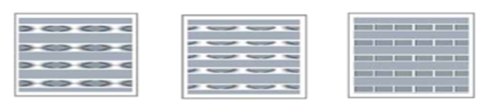
Structural Diversity: The unique wide-gap design, combined with the combination of dimple pattern and studded flat pattern, can form various flow channel forms to meet the needs of different working conditions. It is particularly suitable for handling complex media that are difficult for traditional plate heat exchangers to cope with, such as slurries, sludges, fiber-containing media, and high-viscosity fluids.
Operational Economy and Maintenance: The Wide-Gap WPHE maintains excellent anti-clogging performance while retaining the advantage of high heat transfer coefficient of plate heat exchangers.Under the same heat exchange load conditions, its equipment volume and weight are much smaller than those of shell-and-tube exchangers, enabling more compact installation. Both cold and hot sides can be designed as detachable structures to facilitate mechanical cleaning, reducing downtime and lifecycle costs.
The Wide-Gap WPHE offers two installation forms: vertical and horizontal, and can be customized according to users’ actual needs.
Performance Comparison
|
Feature |
Traditional Plate Heat Exchanger |
Shell-and-Tube Heat Exchanger |
Wide-Gap WPHE |
|
Flow Channel |
Narrow (High clogging risk) |
Large (Resistant to clogging) |
Wide Gap (Resistant to clogging) |
|
Heat Transfer |
High Efficiency |
Low Efficiency |
High Efficiency |
|
Sealing |
Gaskets (Leakage risk) |
Welded (shell) + Gaskets (tube bundle) |
Fully Welded (No gaskets) |
|
Footprint |
Compact |
Large / Bulky |
Compact |
|
Maintenance |
Frequent maintenance |
Difficult to clean |
Detachable / Easy to clean |
Application Case Study: Australian Alumina Project
The SHPHE Solution: SHPHE delivered several custom-engineered Wide-Gap WPHE for Alumina Decomposition / Precipitation Cooling. Since 2021, these units have operated stably under harsh conditions, fully meeting customers’ high standards for equipment quality and energy efficiency.
Key Design Specifications:
|
Design Pressure |
1.3 MPa |
|
Design Temperature |
100°C |
|
Plate Material |
Duplex Stainless Steel (Duplex SS) |
|
Heat Load |
10,000 kW |
|
Heat Transfer Area |
500 m² |
|
Design Code |
ASME BPVC.VIII.1 (U Stamp) |
The product is strictly designed and manufactured in accordance with ASME standards, supervised by an ASME-authorized third-party agency, and holds the ASME “U” Stamp certification. Furthermore, the equipment has completed its registration with WorkSafe (Victoria/Queensland), fully complying with local Australian safety regulations.
Post time: Apr-20-2026