

1. Background
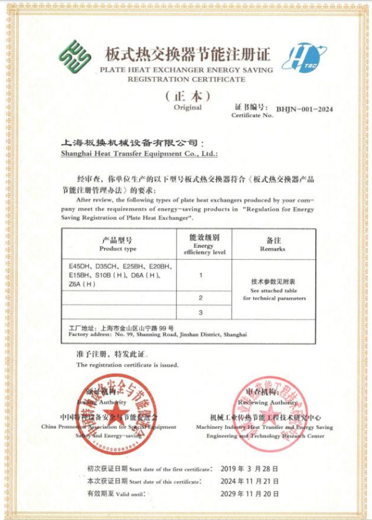
Rising energy costs and global decarbonisation pressures make heat exchanger efficiency a critical factor in industrial operating expenses. In China, Grade‑1 energy efficiency has become a key benchmark for plate heat exchanger upgrades. Shanghai Heat Transfer Equipment Co.,Ltd.(SHPHE) has achieved Grade‑1 certification across its entire product range, verified by independent national testing authorities, and was the first manufacturer to obtain the Energy Conservation Registration Certificate (No. BHJN‑001‑2024).
2. Efficiency Grading Standard
Under Chinese energy industry standard NB/T 47004.1 – Plate Heat Exchangers – Part 1: Plate-and-frame heat exchangers, Clause 10 “Energy Efficiency Evaluation” – the Energy Efficiency Index (EEI) is calculated as:
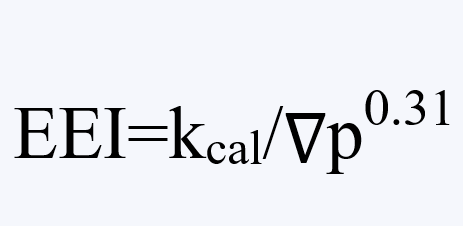
Where:
- kcal = overall heat transfer coefficient (W/(m²·K)) under standard conditions
- ∇p = pressure gradient (Pa/m) under standard conditions
EEI integrates heat transfer coefficient and pressure drop into a single index, focusing on effective heat exchange per unit of energy input, and is the key indicator of economic energy efficiency. The standard defines four EEI grades, with Grade 1 being the highest:
| Grade | 1 | 2 | 3 | 4 |
| EEI | ≥227 | ≥200 | ≥176 | ≥168 |
3. SHPHE Measured Performance
- Heat transfer coefficient: Up to 6000 W/(m²·K) under standard test conditions – 3 to 5 times that of traditional shell‑and‑tube exchangers.
- Pressure drop: Controlled within the optimal range permitted by the standard, ensuring high heat transfer per unit of pressure loss.
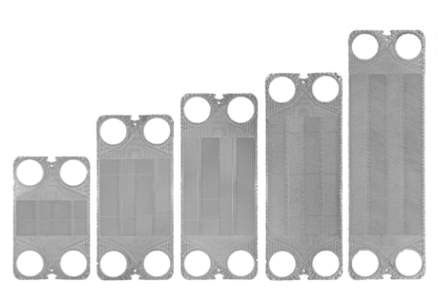
Certified models cover port diameters from DN65 to DN450, with flow capacities from 10 m³/h to 3,200 m³/h. Plate materials include UNS S30400, S31603, S32205, N10276 and R50250, suitable for metallurgy, petrochemicals, district heating, data centres and other industrial/civil applications. Under identical operating conditions, Grade‑1 models achieve a minimum 10% reduction in pump power consumption compared to standard‑efficiency units.
4. Key Technologies
The efficiency performance is supported by core technical approaches as follows:
- Flow channel optimisation – Customised corrugation geometry and channel layouts, refined through CFD simulations, to maximise effective heat transfer area and minimise parasitic pressure losses.
- High‑precision forming– Tooling tolerances exceeding national requirements, with contact‑point rates above 98%, ensuring that actual thermal performance matches design values.
- Optional smart monitoring – An “SmartEye” online system that continuously measures temperature, pressure and flow, calculates real‑time EEI, and provides fault alerts, operational suggestions and health diagnostics.
5. Customer Value
Adopting Grade‑1 plate heat exchangers delivers measurable benefits:
- Operating cost savings – ≥10% lower pump power consumption under the same duty. Over a typical 15‑ to 20‑year service life, the cumulative electricity savings significantly outweigh the initial cost premium.
- Broad applicability – A full range of sizes and materials covers most industrial and commercial heating/cooling needs. SHPHE offers complete support from selection and design, through manufacturing and installation, to maintenance training.
6. Conclusion
SHPHE’s Grade‑1 certified plate heat exchangers are backed by verified data on heat transfer, pressure drop and material versatility. They provide international customers with reproducible, auditable energy savings, helping reduce long‑term operational costs and meet increasingly stringent carbon management requirements.
For detailed technical specifications or customised solutions, please contact our sales engineering team.
Post time: Aug-12-2026