

From high-temperature and high-pressure duties to corrosive media, solids-bearing slurry, flue gas waste heat recovery, and modular skid-mounted systems, SHPHE provides customizable plate heat exchange equipment and integrated solutions for demanding industrial conditions.
1. Petrochemical Applications and HT-BLOC Fully Welded Plate Heat Exchanger
The HT-BLOC fully welded plate heat exchanger is designed for high-temperature, high-pressure, corrosive, and leak-sensitive services. Compared with conventional shell-and-tube equipment, its fully welded plate pack offers high heat transfer efficiency, compact footprint, and reduced leakage risk. It can be used as a replacement or complement to traditional heat exchangers in petrochemical plants, natural gas processing, wastewater preheating, and waste heat recovery.
The equipment can adopt patented reinforced corner connections to improve the strength and welding reliability of titanium, nickel, and other special materials. Enhanced graphite gaskets can further improve sealing performance under high-temperature and high-pressure conditions, supporting stable long-cycle operation with complex media.
Light Hydrocarbon Station Waste Heat Recovery
In light hydrocarbon stations and related oil and gas processing units, waste heat recovery can reuse low-grade heat from process media, flue gas, or circulating streams to preheat feed, circulating water, or auxiliary process media.
Compact plate heat exchange equipment provides a large heat transfer area within limited plot space, making it suitable for energy-saving revamps and cascade heat utilization. Equipment selection should consider corrosion, pressure rating, pressure drop limits, and maintenance access.
Rich-Lean Heat Exchanger
In amine treating units for hydrocarbon separation, natural gas purification, and refinery gas treatment, the rich-lean heat exchanger transfers heat between acid-gas-rich amine and regenerated hot lean amine. This preheats the rich amine to reduce regeneration steam consumption while cooling the lean amine for the downstream absorber, making it a key energy-saving unit in the amine circulation system.
When HT-BLOC is used for rich-lean service, its fully welded structure helps address gasket aging, leakage, and media compatibility issues. The heat transfer coefficient can typically reach two to four times that of conventional shell-and-tube equipment, while the compact structure helps reduce footprint in revamp projects. Typical applications include natural gas desulfurization, decarbonization, dehydration, refinery gas sulfur recovery, and EO/EG chemical units.
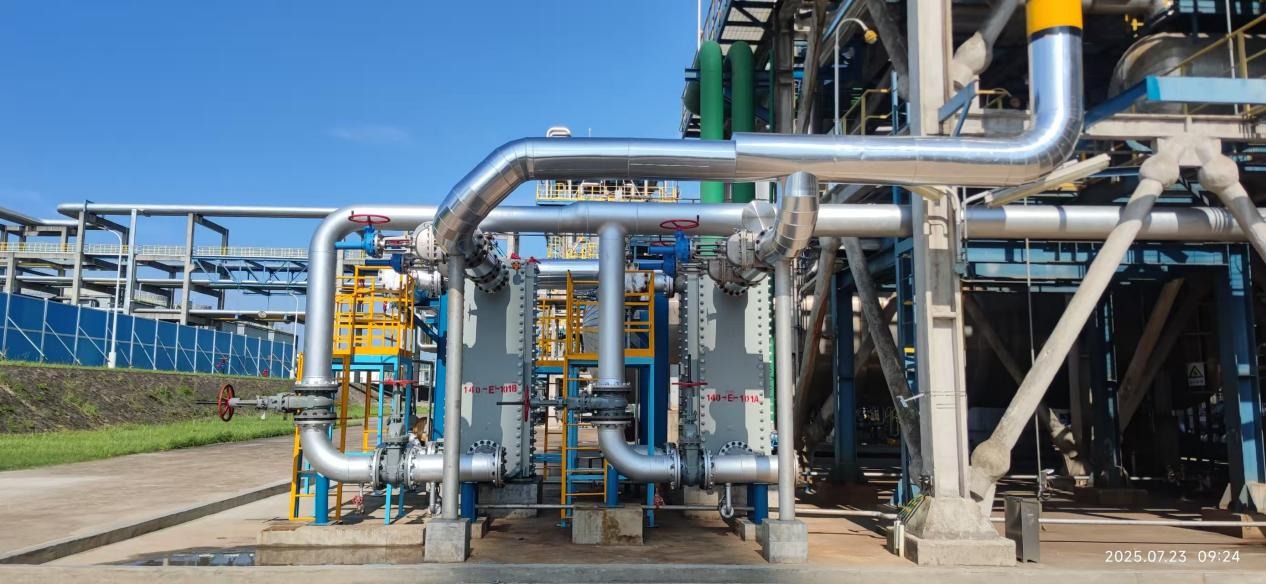
Natural Gas Cooler
Natural gas coolers are used in natural gas treatment, purification, and post-compression cooling services, where pressure resistance, sealing reliability, and corrosion resistance are critical. The compact HT-BLOC structure provides efficient heat exchange in limited space and is suitable for continuous operation in gas stations and petrochemical units.
Materials such as stainless steel, titanium, 254SMO, and C-276 can be selected according to gas composition and cooling medium conditions. The fully welded structure also reduces risks associated with gasket aging and external leakage.
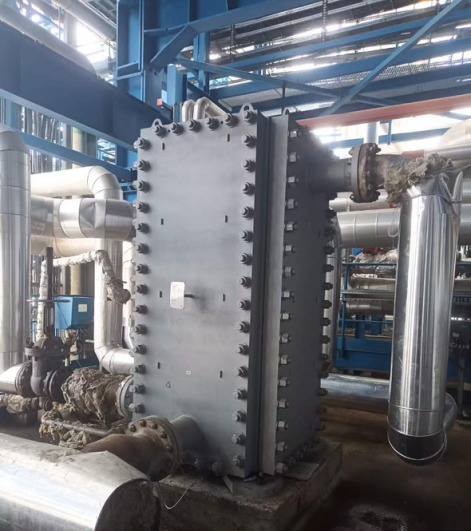
Crude Oil Cooler
In reforming, gasoline and diesel hydrogenation, aromatics, and atmospheric-vacuum distillation units, crude oil coolers, crude oil heaters, overhead condensers, and tower-bottom reboilers all require efficient heat transfer. HT-BLOC can be applied to high-temperature, high-pressure, and complex-media duties to improve heat recovery depth, reduce energy consumption, and optimize plant layout.
The fully welded plate pack eliminates leakage risks associated with rubber gaskets. Compared with traditional shell-and-tube equipment, HT-BLOC can significantly improve heat transfer performance and further reduce terminal temperature difference, supporting higher unit energy efficiency.
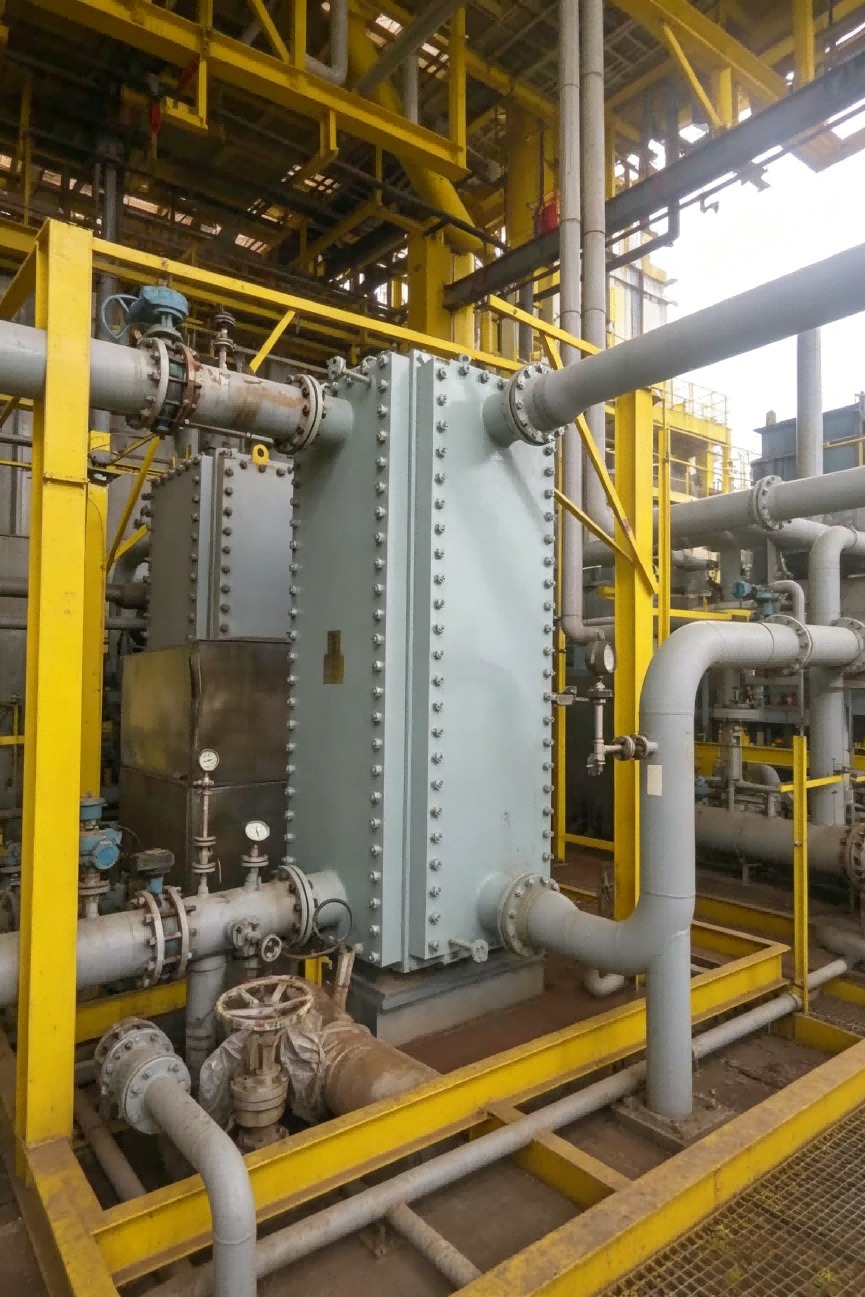
High-Salinity Wastewater Preheater
High-salinity wastewater preheating and heat recovery services are often accompanied by corrosion, scaling, and fouling risks. HT-BLOC can achieve efficient heat transfer with a small terminal temperature difference, helping recover usable heat from wastewater while reducing the maintenance burden associated with conventional gasketed plate heat exchangers in hot, saline environments.
Titanium, 254SMO, and other plate materials can be selected for complex and corrosive wastewater. The fully welded structure also helps ensure special-material welding quality and sealing reliability, making the equipment suitable for preheating or cooling high-salinity, highly corrosive, or higher-temperature wastewater.
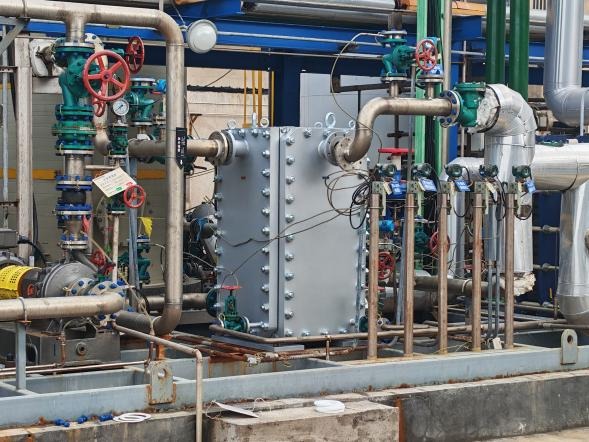
2. Metallurgy, Alumina, and Wide-Gap Heat Exchange Applications
Wide-gap welded plate heat exchangers are suitable for heating, cooling, and heat recovery duties involving solid particles, fibrous suspended matter, viscous slurry, and high-temperature fluids. The enlarged channel gap reduces fouling risk, while the special plate structure balances heat transfer efficiency with pressure drop control.
Plate forms such as flat, dimpled, or column-type plates can be selected according to medium characteristics. Proprietary fluid distribution at the slurry inlet reduces local erosion, and higher wall shear helps control fouling, extend cleaning intervals, and improve equipment life.
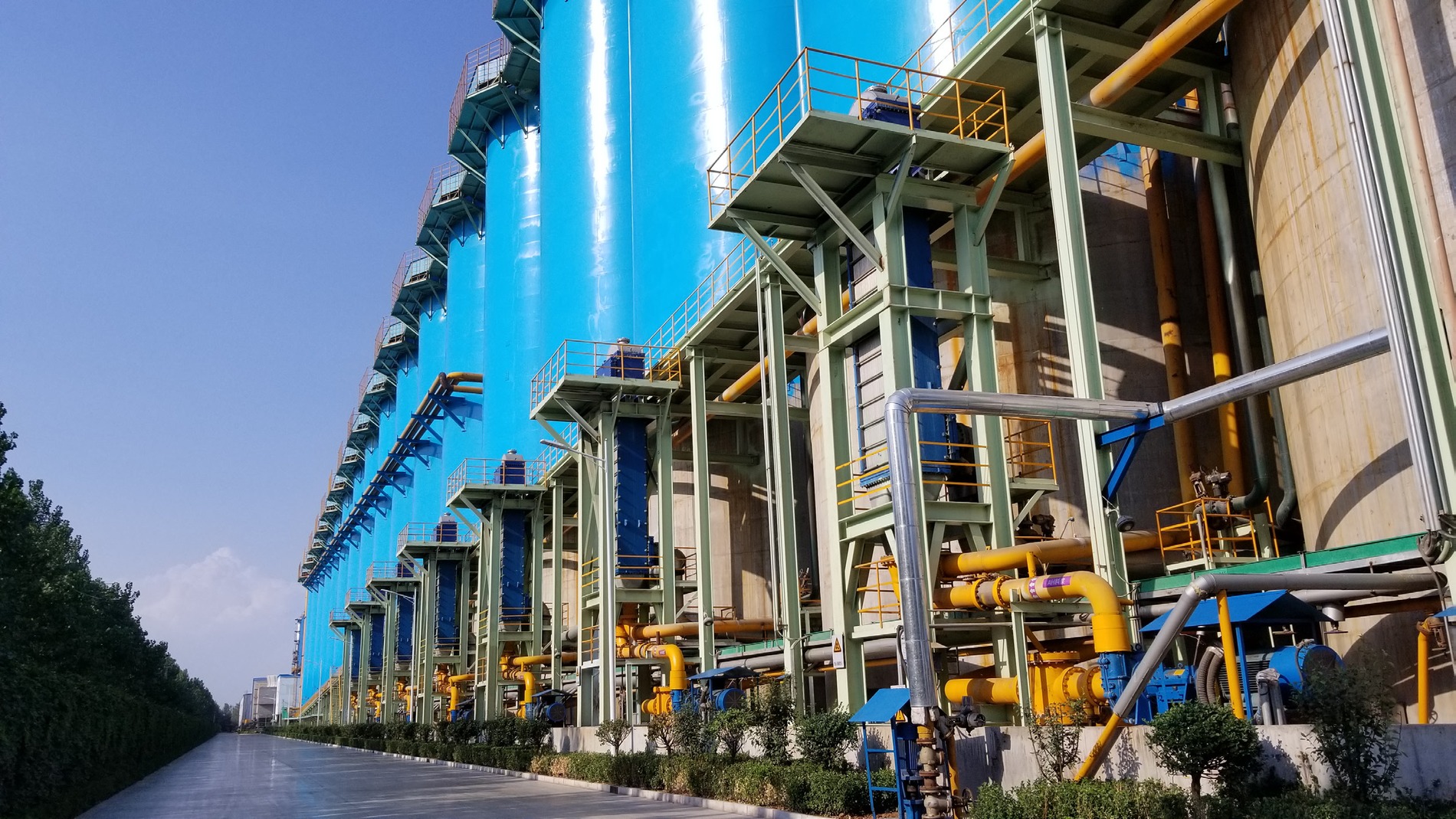
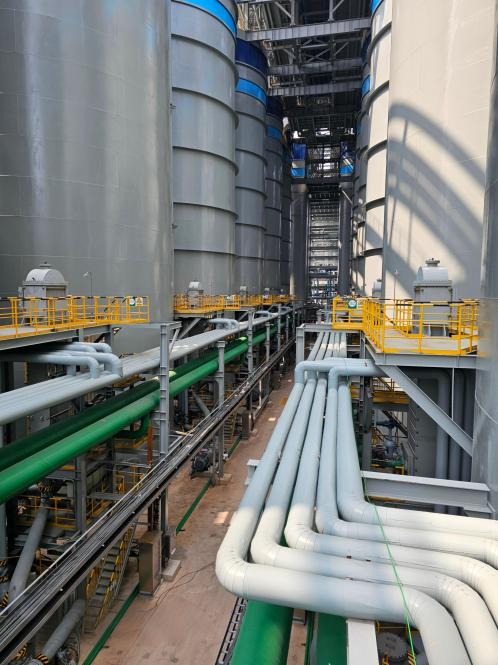
Alumina Intermediate Cooling
The alumina industry is upgrading toward higher efficiency, lower carbon intensity, and more stable operation. SHPHE has long served alumina producers in China and overseas, building mature product and application experience for high-temperature, high-alkali, high-solids, and scaling-prone Bayer process conditions.
Intermediate cooling requires stable heat exchange under high-solids, strong-alkali, and fouling-prone media conditions. Wide-gap welded plate heat exchangers can be customized for vertical or horizontal installation, balancing cleanability, pressure drop control, and heat transfer efficiency.
Alumina Refined Liquor Cooling
Refined liquor cooling directly affects downstream precipitation, agglomeration, and overall system energy consumption. The medium is hot and strongly alkaline and is prone to scaling and plugging, placing high requirements on channel design, material selection, and cleaning convenience.
Wide-gap welded plate heat exchangers reduce fouling risk through larger plate spacing and optimized channel distribution, improving continuous operation while maintaining heat transfer efficiency.
Organic Matter Removal System
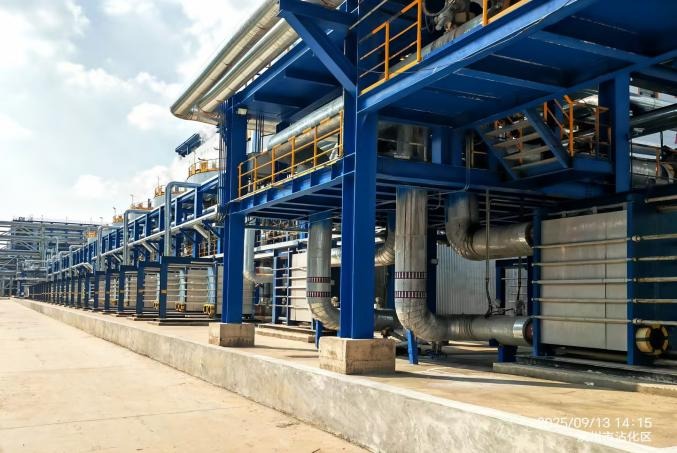
In alumina production, the organic matter removal system controls organic impurities in circulating mother liquor to maintain process stability and product quality. Related heat exchange positions must adapt to high alkalinity, high temperature, solids-bearing media, and fouling tendencies.
Wide-gap welded plate heat exchangers provide stable heating, cooling, or heat recovery capacity for organic matter removal systems, while customizable plate patterns and materials improve adaptability to complex media.
Syrup Cooler
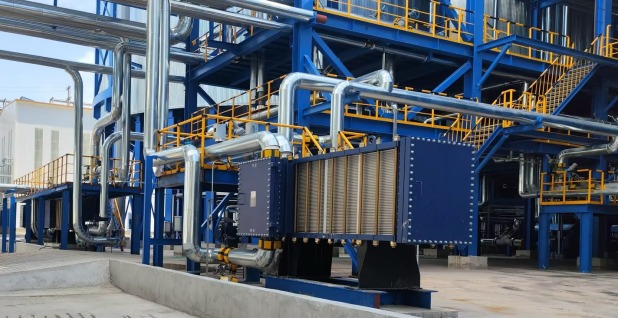
Sugar production uses sugarcane, sugar beet, and similar raw materials, with heat exchange required in juice extraction, clarification, evaporation, crystallization, and other steps. Syrup and related process media are often viscous, scaling-prone, and demanding in terms of cleaning.
Wide-gap plate heat exchangers can handle high-viscosity and impurity-bearing media in temperature-sensitive processes, improving heat utilization and production efficiency while reducing downtime caused by fouling.
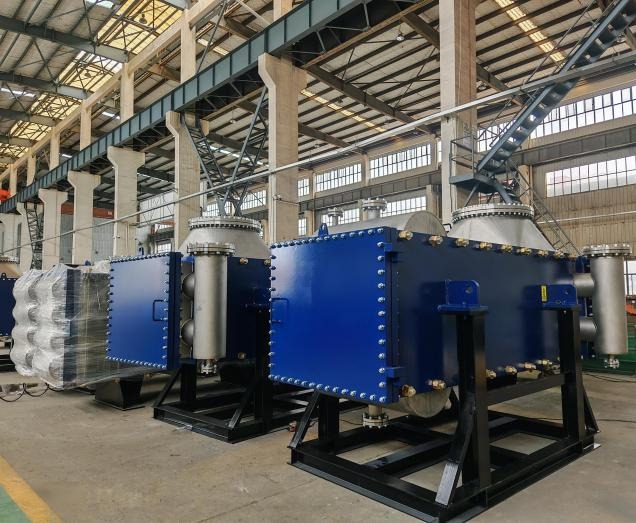
Fermentation Mash Heat Exchange and Liquefied Mash Cooling
Fuel ethanol is produced from feedstocks such as corn and cassava through fermentation and distillation. Fermentation mash heat exchange and liquefied mash cooling require stable heat transfer with solids-bearing, viscous, and temperature-sensitive media.
Wide-gap welded plate heat exchangers can be configured as horizontal or vertical solutions according to site space, reducing fouling risk and maintenance frequency. They are suitable for fermentation, liquefaction, and heat recovery steps in fuel ethanol production.
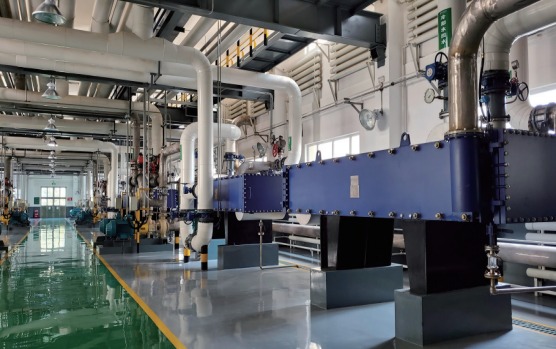
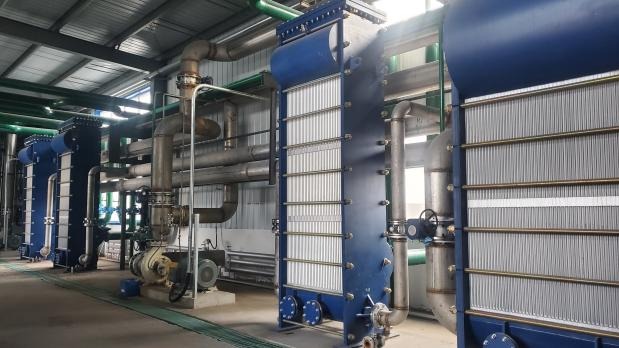
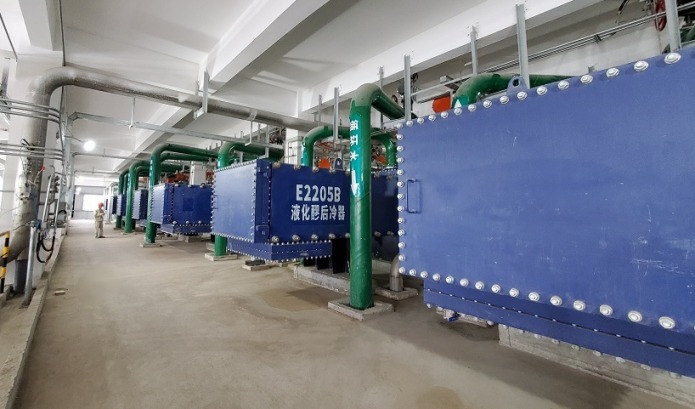
Lithium Iron Phosphate Pretreatment and Chemical Slurry Heat Exchange
Lithium iron phosphate pretreatment systems serve the front end of battery material manufacturing. Accurate batching, slurry heating, cooling, and heat recovery all affect downstream reaction stability. Grinding generates significant heat and requires controlled slurry temperature; preheating during start-up can also reduce slurry viscosity and improve dispersion and flow.
The plate spacing of a wide-gap welded plate heat exchanger can be expanded to 7 mm or more depending on operating conditions, making it suitable for particle-rich and fouling-prone slurry. The fully welded structure avoids gasket leakage, while the high heat transfer coefficient supports precise temperature control during precursor precipitation and crystallization.
Fiber-Containing Wastewater Treatment
Wastewater from papermaking, textiles, food processing, and pharmaceuticals often contains fibers and solid particles that can plug exchanger channels. Wide-gap welded plate heat exchangers provide continuous and stable heat exchange for wastewater treatment processes, reducing efficiency loss and maintenance frequency caused by fouling.
3. PCHE and TP Welded Plate Heat Exchangers
PCHE and TP welded plate heat exchangers are suitable for compact, high-efficiency applications such as high-pressure gas cooling, petrochemical waste heat recovery, and chemical refining. Materials and channel structures can be selected according to corrosion, pressure class, and temperature conditions to meet strict requirements for heat transfer efficiency, sealing reliability, and footprint.
Offshore Oil and Gas Decarbonization and Hydrogen Cooling
PCHE is suitable for high-pressure, highly compact, and corrosion-resistant gas heat exchange applications, including offshore oil and gas, natural gas processing, and hydrogen-related units. In offshore oil and gas decarbonization projects, equipment may need to comply with ASME, BV, NACE corrosion protection, and other specifications or certifications.
Hydrogen cooling requires high sealing reliability, pressure resistance, and safety. Compact welded heat exchange structures provide large heat transfer area in limited space while reducing leakage risk under high-pressure gas conditions.
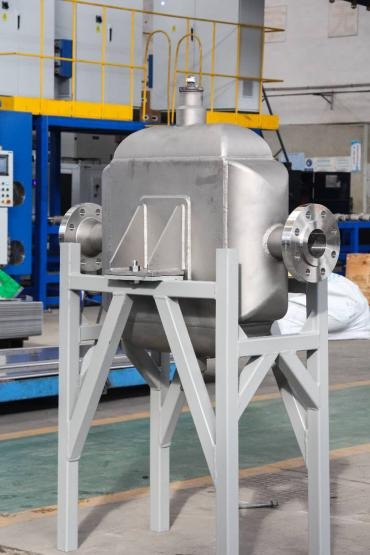
Acrylic Acid Overhead Condenser
Acrylic acid and ester refining require high product purity and stable continuous operation. At the same time, the process media are corrosive and operating temperatures may fluctuate, placing demanding requirements on overhead condensers.
Fully welded plate heat exchangers can use corrosion-resistant materials such as austenitic stainless steel, duplex stainless steel, titanium and titanium alloys, nickel, and nickel-based alloys. The welded sealing structure avoids rubber gasket aging, while customized corrugated plates and channel design strengthen turbulence, improve heat transfer, and support pressure stability, deformation resistance, and impact resistance.
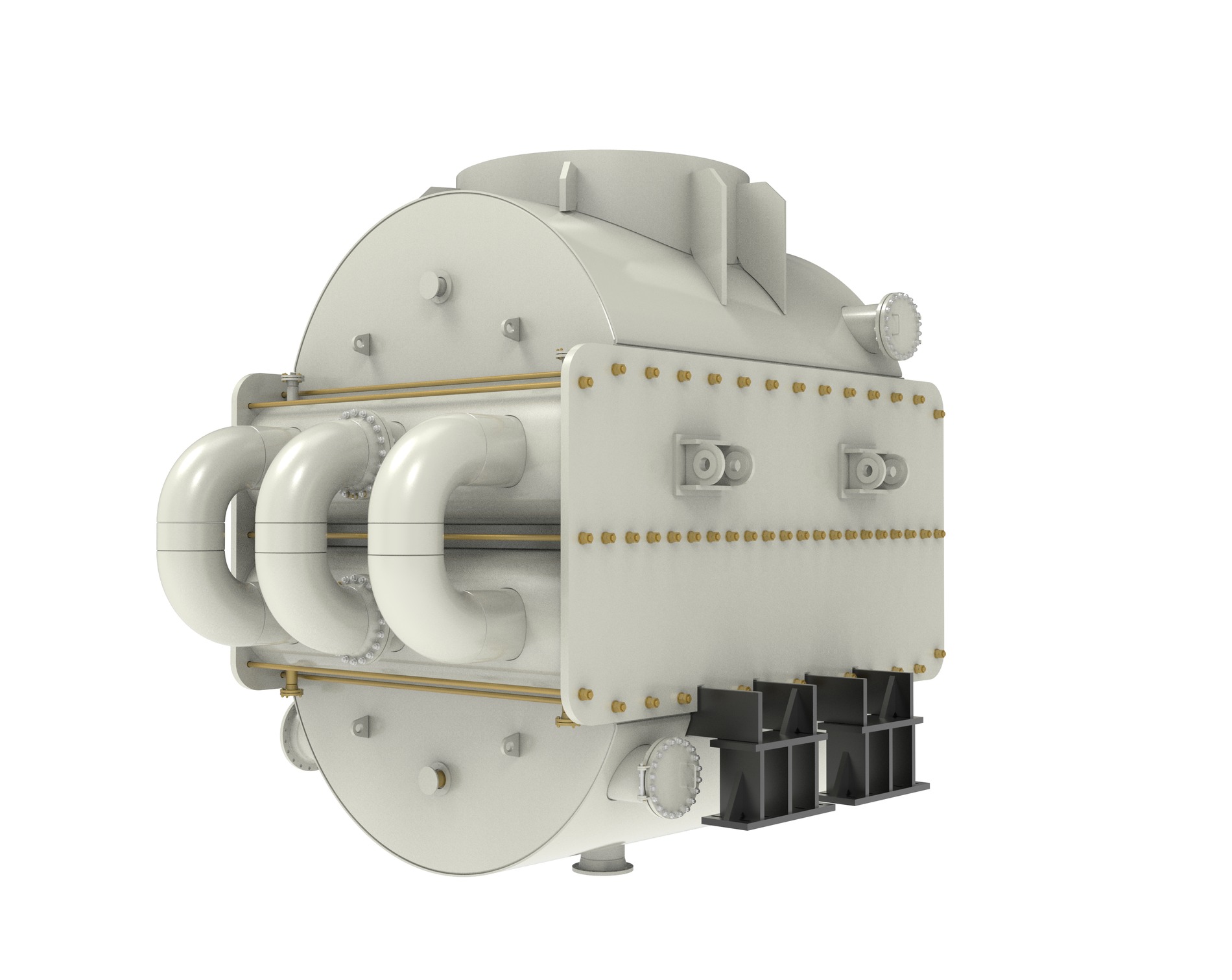
Natural Gas Purification Cooler
Natural gas purification coolers are used in purification, acid gas removal, dehydration, and tail gas treatment processes. These duties require corrosion resistance, sealing reliability, and continuous operation.
Welded plate heat exchangers reduce leakage risk and improve system layout efficiency through compact heat transfer area, making them suitable for natural gas purification and chemical tail gas treatment.
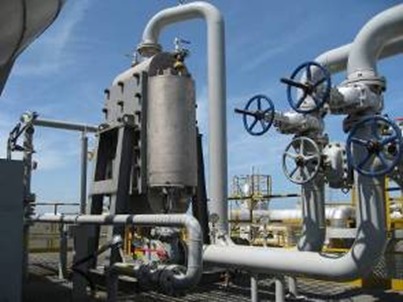
Internal Plate Heater of Stripping Column
An internal plate heater can provide stable heat inside or alongside a stripping column. It is suitable for applications requiring enhanced heat transfer, reduced footprint from external heat exchangers, or optimized heat distribution within the tower.
The plate structure offers high heat transfer area per unit volume and can be customized according to tower space, medium properties, maintenance method, and heat duty, helping improve stripping efficiency and operating stability.
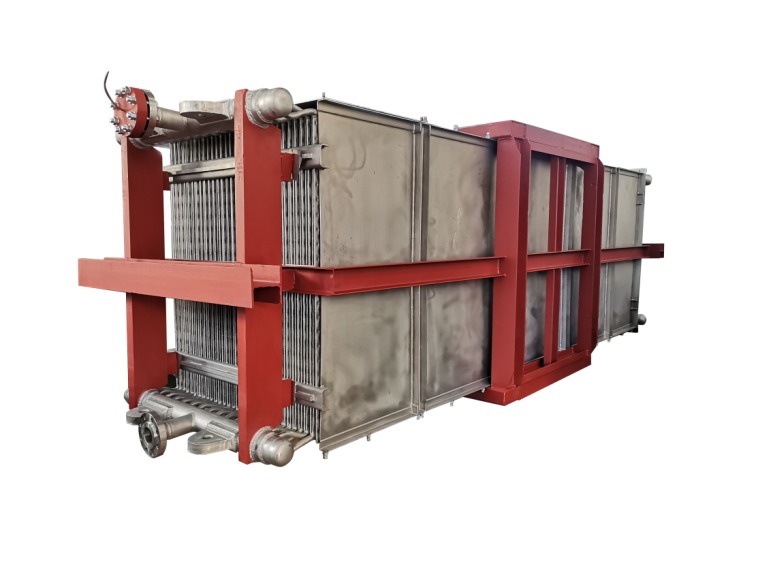
4. Gasketed Plate Heat Exchangers and Utility Systems
Gasketed plate heat exchangers are suitable for duties requiring regular inspection, cleaning, and maintenance. Flexible selection of plate materials, plate patterns, and gaskets allows coverage of chemical, district heating, power, marine cooling, and battery material applications with moderate temperature and pressure requirements.
Chemical Processing and Polyolefin Elastomer Production
In chemical production, gasketed plate heat exchangers can be used for cooling, heating, heat recovery, and pressure isolation. Polyolefin elastomer, or POE, is a key material for next-generation solar cell encapsulation films, automotive lightweight components, and other high-end applications, and its production requires strict process temperature control.
Stable heat exchange in POE and related polymerization processes helps maintain reaction temperature, protect product quality, and support energy saving and continuous operation.
Iron Phosphate Production and Battery Material Heat Exchange
Iron phosphate is the core precursor for lithium iron phosphate, and its quality directly affects the electrochemical performance of downstream cathode materials. The production process often involves strong acid corrosion, solids-related plugging, and process waste heat recovery requirements.
Gasketed plate heat exchangers can handle medium cooling, reactor temperature control, and heat recovery in low-temperature and low-pressure liquid duties. Through cascade energy utilization, heat from 150-200 degrees C drying or kiln tail gas can be recovered for fresh air or boiler feedwater preheating, while stable heat exchange in reactor temperature control improves product consistency.
Chilled Water Heat Exchanger for Power Station
Power plants require heat exchange equipment with accurate temperature control, broad operating adaptability, and long-term reliability. SHPHE high-efficiency plate patterns can improve heat transfer efficiency while meeting specifications such as ASME and reducing system pressure drop.
Chilled water heat exchangers for power stations can be used in closed cooling water, auxiliary cooling water, and utility heat exchange systems, helping improve unit operating stability.
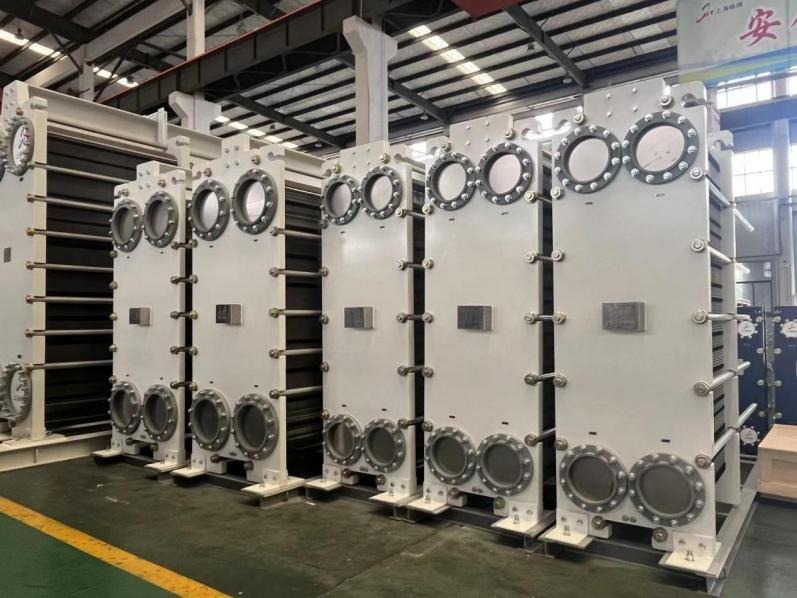
Pressure Isolation Heat Station
A pressure isolation heat station is a core hub in long-distance district heating networks, used to isolate network pressure while transferring heat. Cross-regional heating requires equipment with high pressure resistance, large heat transfer area, and stable operation.
By integrating gasketed plate heat exchangers with pumps, valves, and controls, the station can provide stable heat exchange between the primary and secondary networks while supporting maintenance access and long-cycle district heating operation.
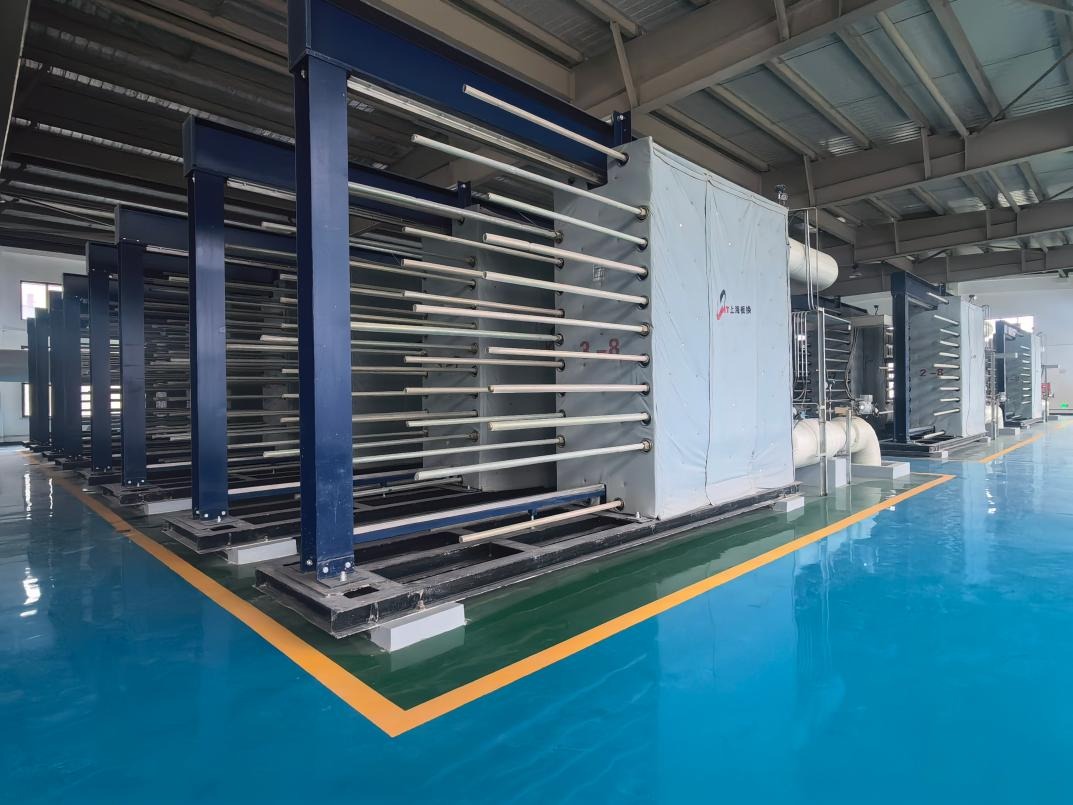
5. Marine Industry Applications
Marine applications emphasize reliability, corrosion resistance, compact layout, and maintenance convenience. Plate heat exchange equipment can be used for marine central cooling, seawater cooling, diesel engine cooling, desulfurization systems, and onboard utility systems.
Marine Cooling System
Gasketed plate heat exchangers are compact, efficient, and easy to maintain. They can be used as central coolers, diesel engine coolers, lube oil coolers, jacket water coolers, and similar marine duties.
For seawater cooling conditions, titanium plates and other corrosion-resistant materials can be selected, with design carried out according to classification society and project specifications.
Marine Desulfurization System
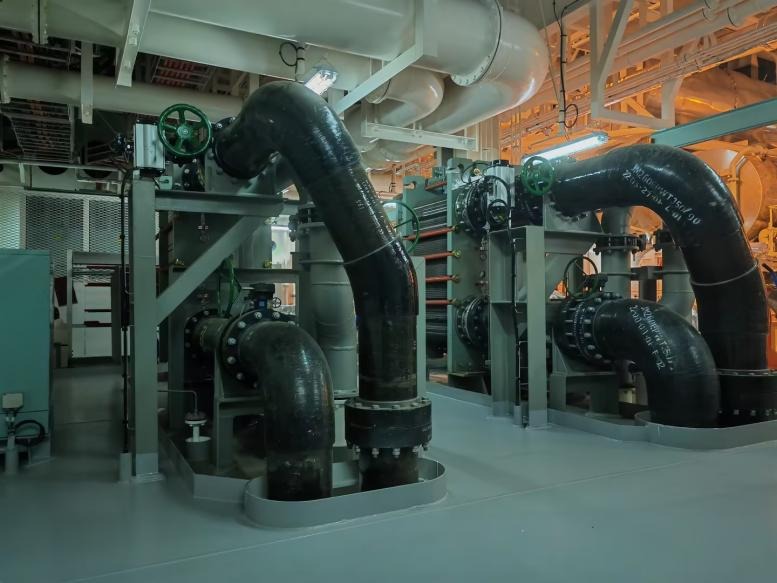
Marine desulfurization systems operate in confined engine-room environments and require corrosion resistance, vibration resistance, compact installation, and stable continuous operation. Plate heat exchange equipment can be used for system cooling, heat recovery, or auxiliary heat exchange.
With compact plate structures and corrosion-resistant materials, the equipment can reduce shipboard layout difficulty and meet long-term operating requirements in marine environments.
6. Flue Gas Waste Heat Recovery, Air Preheaters, and Plate Pair Applications
Air preheaters, flue gas exchangers, and plate pair heat exchange products are used for flue gas waste heat recovery, process air preheating, and industrial energy-saving revamps. Plate-type structures support compact layout and modular maintenance, while materials and structure can be matched to flue gas composition, temperature conditions, and corrosion risk.
Waste Incineration Gas-Gas Heat Exchanger
In waste incineration systems, flue gas waste heat recovery can preheat combustion air, process gas, or other media to improve overall energy utilization. Gas-gas heat exchangers must adapt to dust, corrosive components, and temperature fluctuations in flue gas.
Plate or plate-pair structures provide large heat transfer area in limited space and can be designed with anti-corrosion, anti-fouling, and ash-cleaning features according to flue gas characteristics.
Incinerator Flue Gas Exchanger
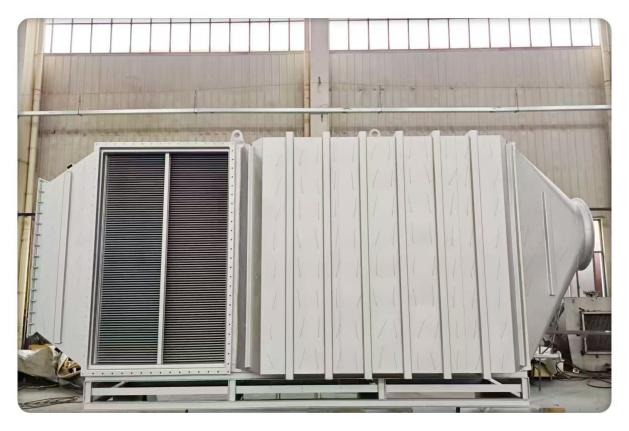
Incinerator flue gas exchangers recover heat from high-temperature flue gas for air preheating, waste heat utilization, and tail gas treatment systems. The equipment must balance high-temperature resistance, corrosion resistance, low pressure drop, and maintainability.
Through plate-type heat exchange structures and modular design, flue gas exchangers can improve waste heat recovery efficiency and reduce overall system energy consumption.
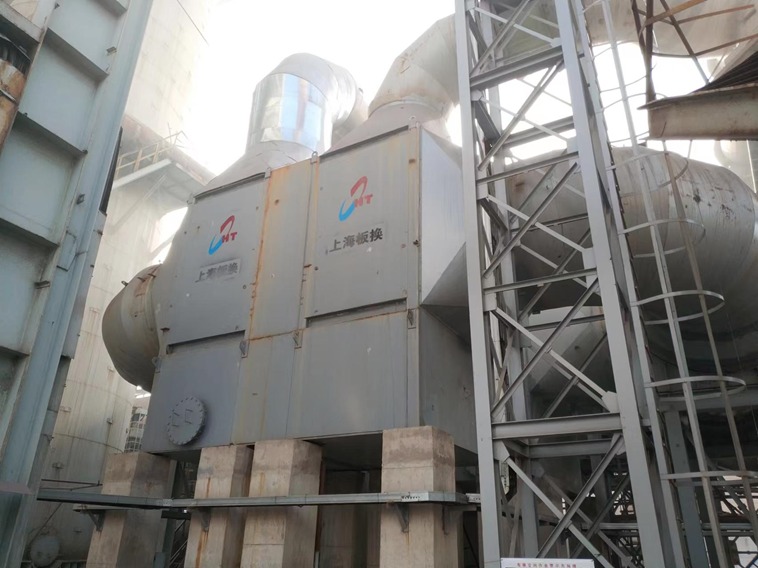
Air Preheater for Steel Mill
Steel and metallurgical processes contain large amounts of recoverable heat in high-temperature flue gas and process exhaust. Air preheaters can use flue gas waste heat to preheat combustion air or process air, reducing fuel consumption and improving furnace efficiency.
For steel mill flue gas with dust, high temperature, and fluctuating load, suitable plate-pair structures and material configurations can be selected to support long-term operation and maintenance.
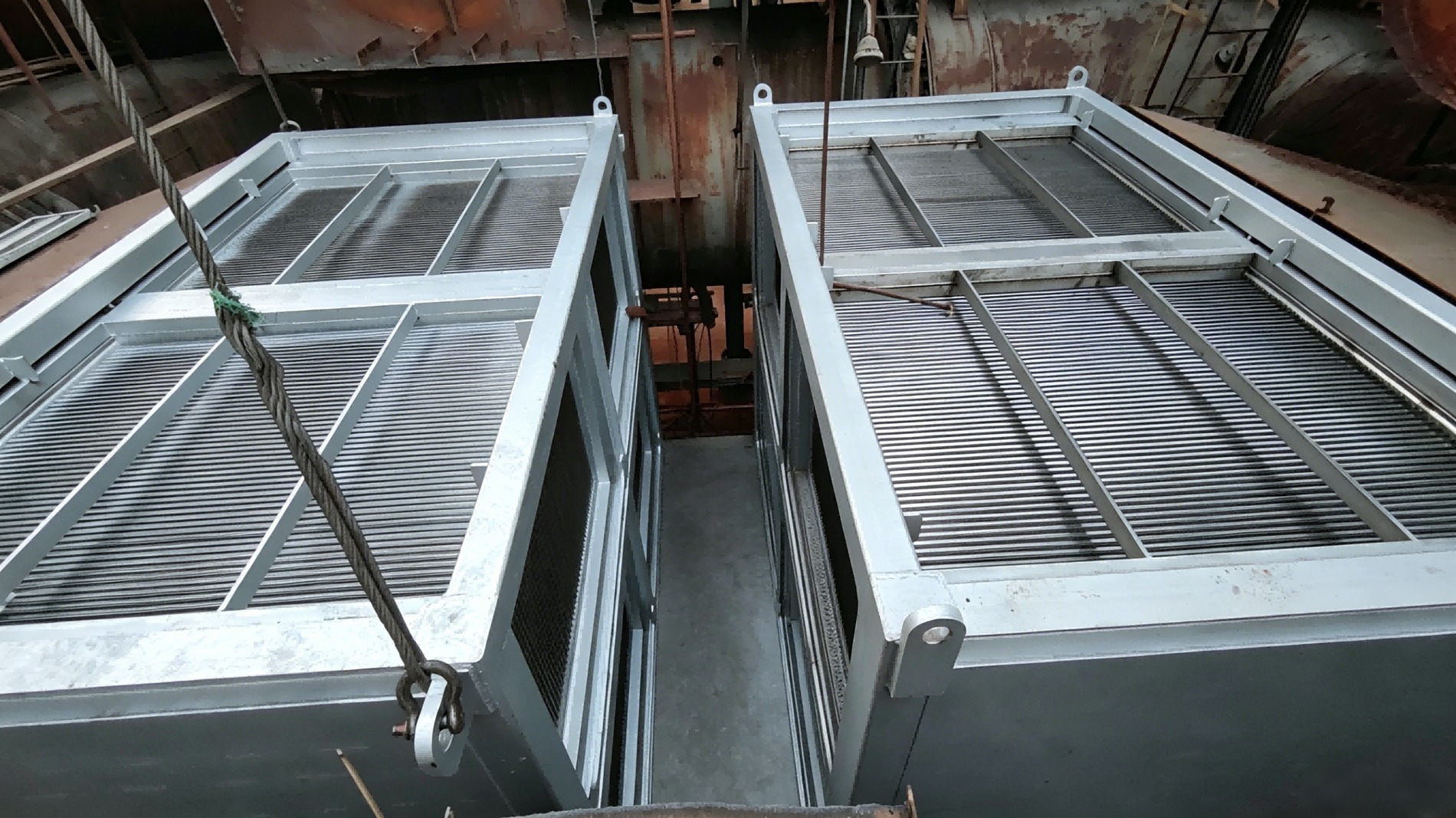
Plate Pair and Special Structure Heat Exchange
Plate pairs can serve as modular heat exchange cores for industrial heat recovery, flue gas exchange, and process air preheating. Large-size plate pairs can be customized according to installation space, flue gas temperature, heat duty, and maintenance method.
Through customized plate structures, channel spacing, and material configuration, plate-pair products can adapt to different site boundary conditions while providing large heat transfer area in compact space.
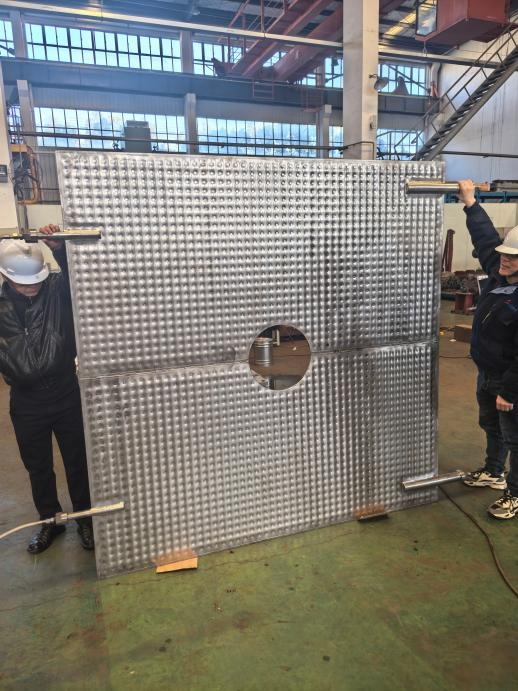
7. Offshore Engineering and Skid-Mounted Heat Exchange Systems
Heat exchange units can integrate plate heat exchangers, pumps, valves, instruments, and control systems into complete packages. They support remote and local control, centralized management, and modular delivery. Such systems are suitable for offshore engineering, natural gas processing, new energy waste heat recovery, and district heating projects that require fast installation and integrated delivery.
Marine Skid-Mounted Heat Exchange Unit
Marine skid-mounted units are designed for high salt spray, strong corrosion, and space-limited conditions. They can integrate gasketed or fully welded plate heat exchangers with medium monitoring, control, and alarm functions. The overall design can adapt to offshore platforms, marine engineering, and modular delivery scenarios.
Skid-mounted delivery reduces site construction workload, improves project installation efficiency, and supports unified inspection and maintenance in offshore engineering applications.
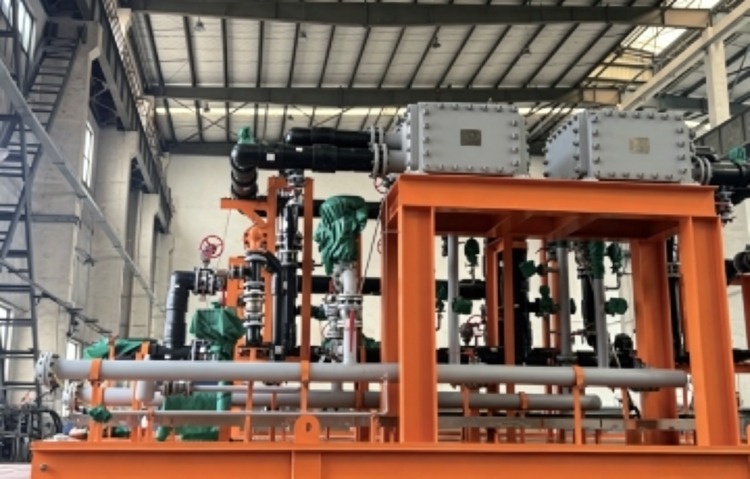
Deep Natural Gas Processing Heat Exchange Unit
Deep natural gas processing systems include acid gas removal, dehydration, cooling, heat recovery, and utility heat exchange steps. These processes require high system integration, reliable sealing, and stable control.
Packaged heat exchange units can integrate heat exchangers, piping, valves, instruments, and control modules according to process package requirements, forming an integrated solution that is convenient for installation, commissioning, and maintenance.
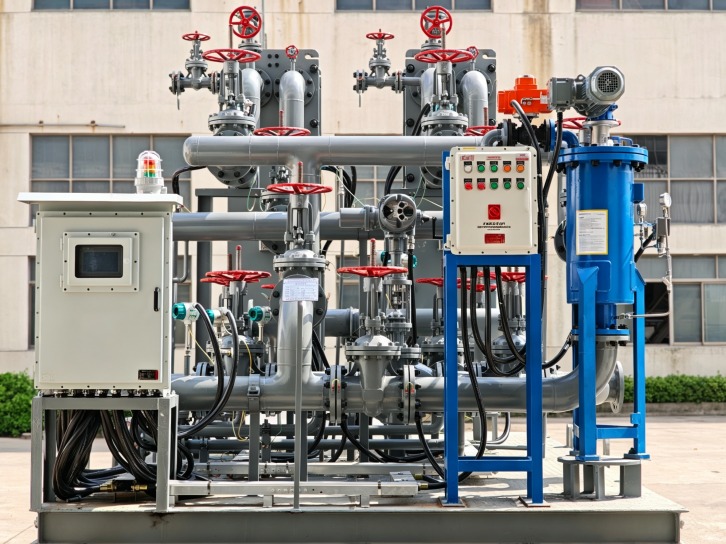
LNG Cooling Extraction Heat Exchanger Skid
An LNG cooling extraction heat exchanger skid uses the cold energy released during LNG vaporization to provide heat exchange conditions for air conditioning, refrigerants, or other low-temperature demand systems. Such systems must balance cryogenic safety, heat transfer efficiency, control stability, and compact layout.
Through skid-mounted integration, the heat exchanger, piping, valves, instruments, and control system can be prefabricated and tested in the workshop, reducing site installation workload and improving delivery reliability.
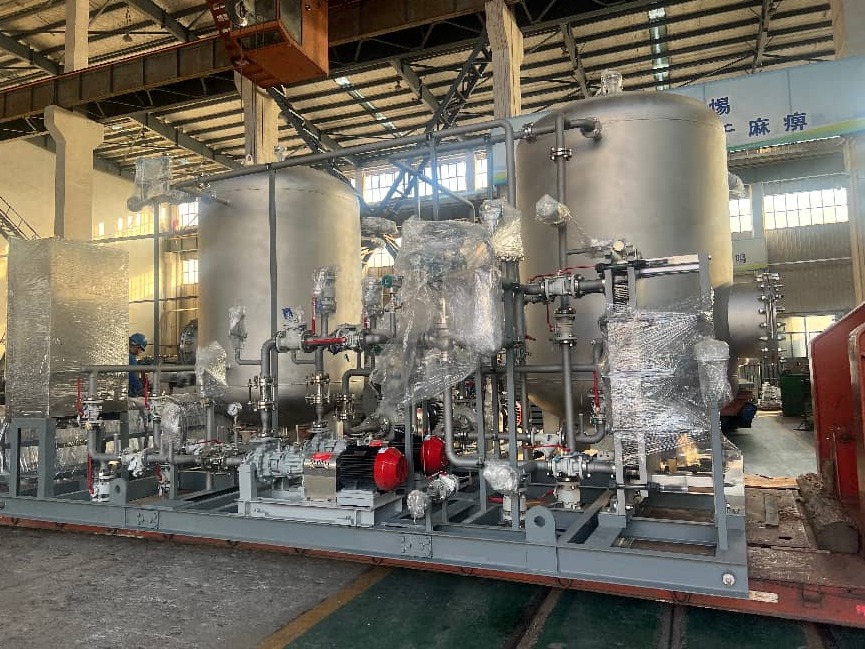
Hydrogen Fuel Cell Waste Heat Recovery
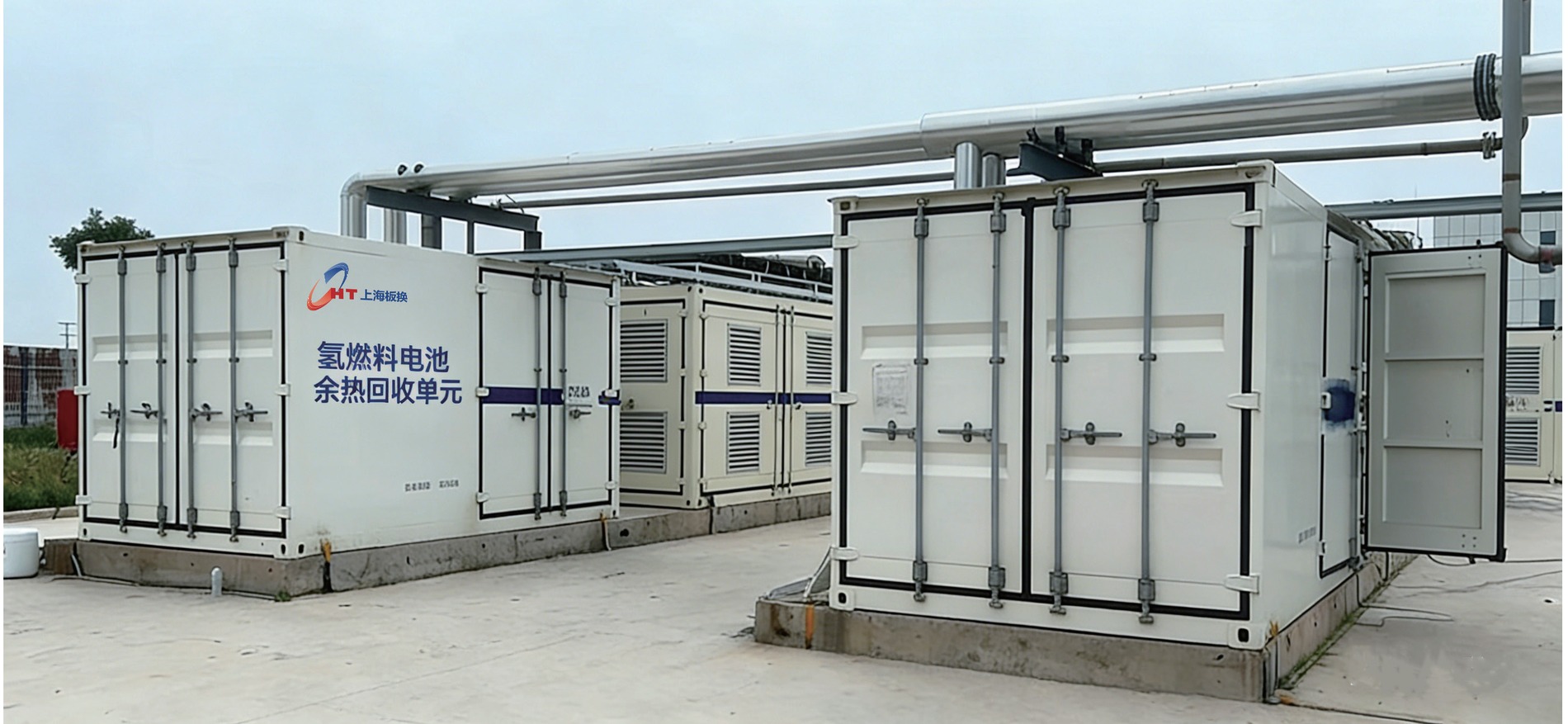
In hydrogen fuel cell waste heat recovery, plate heat exchangers are key components for cascade energy utilization. Integrating the heat exchange unit into a containerized or skid-mounted module creates a plug-and-play system solution that balances compactness, safety, and intelligent control.
The solution can be used in fuel cell systems, test platforms, or new energy integrated energy stations to improve overall energy utilization efficiency.
Post time: Jun-19-2026